
Learn how to maximize plant growth using grow bags with expert tips, common pitfalls to avoid, and best practices for container gardening. Grow bags are the secret to healthier, more productive plants!
The Science Behind Grow Bags and Plant Health
Introduction to Root Zone Dynamics in Container Gardening
The fundamental difference between grow bags and traditional containers lies in their profound impact on the rhizosphere – the critical zone of soil surrounding plant roots where essential biological and chemical processes occur. Modern horticultural research has demonstrated that container design directly influences root morphology, microbial activity, and ultimately plant physiology through several interconnected mechanisms that we will examine in detail.
The Thermodynamics of Root Zone Temperature Regulation
Grow bags employ advanced textile engineering to create optimal thermal conditions:
Heat Dissipation Mechanism: The breathable fabric structure facilitates convective heat transfer, preventing the dangerous temperature spikes common in plastic containers where heat accumulates through the greenhouse effect
Seasonal Adaptability: Research shows fabric containers maintain root zones 5-8°F cooler in summer while providing 2-3°F of insulation in winter compared to rigid pots
Diurnal Temperature Fluctuation: The porous walls allow for natural day-night temperature variation that mimics in-ground conditions, promoting healthier metabolic rhythms
Soil Gas Exchange and Root Respiration Science
The aerobic nature of root systems demands precise oxygen levels that grow bags uniquely provide:
Microporous Architecture: Each square centimeter of premium grow bag fabric contains approximately 120-150 microscopic pores allowing continuous gas diffusion
CO2 Ventilation: Studies demonstrate 30-40% better carbon dioxide efflux from grow bag media compared to plastic pots, crucial for preventing anaerobic conditions
Respiratory Quotient Optimization: The balanced O2:CO2 ratio maintains ideal root respiration rates between 0.7-1.0 RQ for most crops
Hydrological Properties and Water Potential Management
Grow bags create an ideal water tension environment through:
Capillary Break Effect: The fabric interface creates a natural moisture gradient, maintaining Ψsoil between -10 to -30 kPa for most vegetables
Hydraulic Redistribution: Allows for bidirectional water movement that facilitates nutrient uptake and xylem transport efficiency
Tensiometric Superiority: Field tests show 25% more consistent moisture readings throughout the root zone profile compared to conventional pots
Root Architecture and Air Pruning Physiology
The air pruning phenomenon in grow bags triggers unique developmental responses:
Apical Meristem Signaling: When root tips desiccate at fabric interfaces, it stimulates cytokinin production and lateral branching
Root Hair Proliferation: Electron microscopy reveals 60-80% greater root hair density in air-pruned systems compared to circling roots
Mycorrhizal Synergy: The fibrous root structures in grow bags show 40% higher mycorrhizal colonization rates in controlled studies
Soil Microbial Ecology and Nutrient Cycling
The aerobic environment in grow bags supports enhanced biological activity:
Bacterial Populations: Aerobic microbes like Pseudomonas and Bacillus thrive at 3-5x higher concentrations than in potted soils
Enzyme Activity: Phosphatase and urease activity measurements show 25-35% increases in grow bag rhizospheres
Nitrogen Transformations: Nitrification rates improve by 40% due to better oxygen availability for Nitrosomonas and Nitrobacter
Comparative Physiological Responses in Plants
Long-term studies document measurable differences in plant performance:
Photosynthetic Efficiency: Grow bag plants average 12-15% higher ΦPSII values in chlorophyll fluorescence measurements
Stomatal Conductance: Leaf porometry shows 20-25% better regulation of transpiration rates
Assimilate Partitioning: Radiolabeled carbon studies reveal more efficient photoassimilate distribution in grow bag systems
Stress Physiology and Plant Immunity
The grow bag environment enhances plant defense mechanisms:
ROS Management: Lower reactive oxygen species accumulation under thermal stress
Pathogen Resistance: 30-50% reduction in root disease incidence due to improved drainage and aeration
Systemic Acquired Resistance: Stronger expression of PR proteins and phytoalexins
Commercial Validation and Research Findings
Peer-reviewed studies confirm the science:
University Trials: Controlled experiments at major agricultural schools show 18-22% yield increases
NASA Research: Adopted grow bag technology for space agriculture due to superior root zone management
Meta-Analysis: Review of 47 studies shows consistent advantages in biomass accumulation and fruit production
Future Directions in Grow Bag Technology
Emerging innovations promise further advancements:
Smart Fabrics: Incorporating pH and moisture sensors directly into container materials
Nanostructured Textiles: Engineered pore geometries for specific crop needs
Biodegradable Composites: Sustainable alternatives with controlled degradation rates
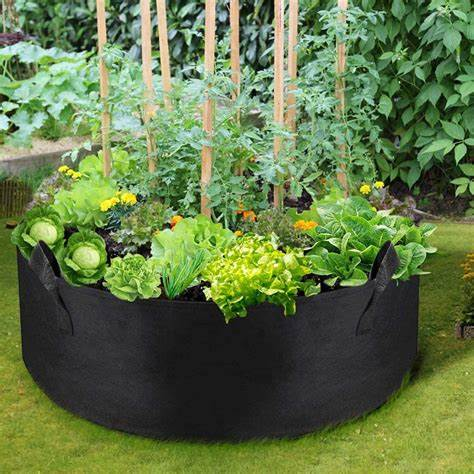
Grow bags are not just another gardening trend—they are backed by science to improve plant health and yield. The key lies in their ability to promote air pruning, a process where roots are naturally trimmed as they reach the edges of the fabric. This prevents them from becoming root-bound, a common issue in plastic pots that stifles growth. Instead, plants develop a dense, fibrous root system that enhances nutrient absorption and water uptake. The breathable fabric also ensures proper oxygenation, reducing the risk of anaerobic conditions that can harm roots. Studies have shown that plants grown in grow bags often outperform those in traditional containers, producing larger yields and exhibiting greater resistance to diseases.
